30 Tips for Safe Road Trips
Vanlife is an unforgettable adventure with its spirit of freedom , simplicity and closeness to nature . To fully enjoy a road trip in a converted van, camper van or motorhome, careful planning is essential to ensure a safe road trip.
Here are 30 practical tips to ensure your safety (and that of your belongings!) during your adventure. By following these tips, you can set off with peace of mind and fully enjoy the road, the scenery, and the people you meet.
1. Road trip preparation: safety starts before departure |
- Check your vehicle

A careful inspection can prevent breakdowns or accidents along the way.
Before hitting the road, a complete inspection of your vehicle is essential. Check the condition of the tires , making sure they are properly inflated and that their wear is correct, the condition of the brakes . Don't forget to check the oil level , coolant and headlights , in order to drive safely, even at night. Finally, the battery must be in good condition to avoid any unpleasant surprises.
Extra tip: If in doubt, have a professional do a full inspection before you set off for a stress-free road trip.
- Have a fire extinguisher on board

Fires can start at any time, and having a fire extinguisher suitable for Type A, B, and C fires (wood, flammable liquid, gas) can really make a difference. Place it in an easily accessible location , preferably near the driver or passenger. It can save lives in the event of a mishap. Although we hope you'll never have to use it.
➡️ Discover our portable fire extinguishers by clicking here
- Install a carbon monoxide and smoke detector

These detectors, simple to install and inexpensive , can alert you in case of danger, even while you sleep. Carbon monoxide is an odorless and invisible gas that can be deadly, and a smoke detector is essential in case of fire. Never overlook this detail, it could literally save lives. (As a little anecdote, our carbon monoxide detector saved us after a faulty gas regulator..)
➡️ Discover our carbon monoxide and smoke detectors by clicking here.
- Make sure you have essential tools

On the road, the unexpected can happen, and it's important to be able to react quickly. Have a toolbox with the essentials on board .
Don't forget jumper cables for when your battery dies. With these basic tools, you'll be better prepared to handle any minor mishaps that may arise during your road trip.
- Prepare a first aid kit

Don't let an accident or injury ruin your adventure. Always have a well- stocked first aid kit with bandages , disinfectants , basic medications (such as painkillers, allergy medications, or aspirin), and a survival blanket . These items can be vital in case of a minor injury or emergency. Remember to check the expiry date on your products and update it regularly.
➡️ Discover our different first aid kits by clicking here
- List local emergency numbers

Before you hit the road, make sure you have the local emergency numbers in the countries you're traveling through . Knowing the contact details for the fire department, police, or ambulance service can make all the difference in the event of an emergency. These numbers vary from country to country , so check online to find them in advance.
It's always useful to write them down in advance in case you're in an area where you don't have internet access...
- Download useful apps

Maps.me , Park4Night , and weather apps can help you find spots and stay informed.
➡️ Find more information on our blog article by clicking here
- Plan (at least) your route

A road trip doesn't mean driving randomly. Take the time to plan your route and get a general idea of the stages. This will allow you to avoid isolated or risky areas and find places where you can rest safely.
Knowing where you'll be stopping in advance can also help you avoid surprises, especially in sparsely populated areas.
- Download Offline Road Maps

Mobile network coverage can be unpredictable in some areas. To avoid being left without a GPS, download offline maps before you set off. Apps like Maps.me or Google Maps offer this option, allowing you to navigate even without an internet connection.
- Have a digital copy of your important documents

In case your documents are lost or stolen , a digital copy is essential . Scan your passport , driver's license , insurance and store them in a secure cloud . This way, you'll always have an accessible copy, no matter where you are.
- Update your insurance

Check that your vehicle insurance covers damage, theft and liability while traveling.
- Take out specific vanlife insurance. Some insurance policies cover van life equipment and accessories.
- Opt for breakdown assistance. A zero-kilometer option can be a lifesaver in the event of a breakdown in the great outdoors.
- Protect yourself against theft. Some insurance companies offer options to reimburse your equipment in the event of a burglary.
- Take out international health insurance. This can be vital if you become ill or have an accident away from home.
- Duplicate your keys

Losing keys happens more often than you think, so keep a spare set of keys in a secure place , whether at a friend's house or in a safe . You'll be glad to have it handy if you need it!
2. On the road: driving safely |
When you're on the road in your van or campervan, safety must always come first. Conditions are often different from those of a conventional vehicle, and it's essential to adapt your driving to ensure a smooth experience. Here are some tips for driving safely.
- Respect the speed limits

Vans and motorhomes are larger and heavier vehicles, which means they are more susceptible to the effects of crosswinds and have greater wind resistance than traditional cars.
- Adapting driving to a large vehicle

Driving a heavy vehicle requires a certain amount of vigilance , especially when maneuvering in tight spaces or taking sharp turns . Due to their weight and size, these vehicles take longer to brake than light cars . This means that it is important to maintain a greater safety distance from the vehicle in front of you to give yourself time to react. In addition, when driving a van or campervan , you also need to be more attentive to road conditions and the various obstacles that may arise (cobblestones, potholes, etc.)
3. Secure a spot for the night |
- Check local laws

Before parking, check local laws regarding parking and wild camping . Some places prohibit camping outside designated areas, and fines may apply. A quick search online or using an app like Park4Night can help you avoid unpleasant surprises.
- Favor campsites in risky areas

In sensitive and less frequented areas , campsites are often safer . They offer increased security thanks to the presence of guards and the friendliness among travelers. This also allows you to take advantage of the services and feel less isolated at night.
- Avoid rest areas on the motorway as much as possible

Highway rest areas may seem convenient , but they are not ideal for spending the night safely . They are often poorly lit , isolated , and can attract unwanted visitors with unexpected visits during the night. It is best to exit the highway and find a spot 5-10 minutes away.
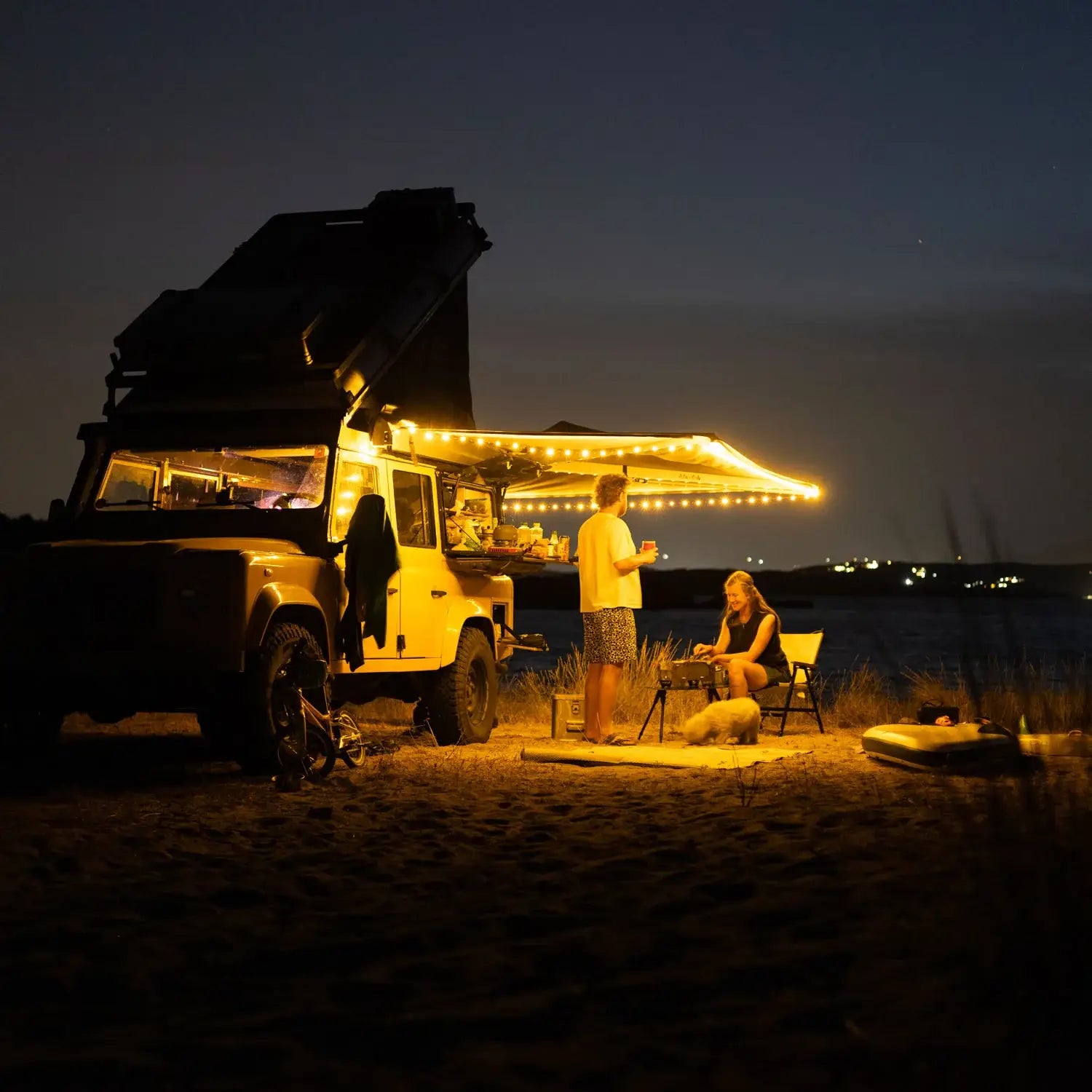
- Choose well-lit spots

Isolated or overly hidden areas can attract intruders.
If you are in areas with low traffic or feel unsafe , well-lit areas are safer because the lighting deters intruders and allows you to see better around you.
- Make sure you can leave the premises quickly.

If possible, park so that you can leave easily . Parking that is too tight or complicated can make it difficult to escape if something goes wrong . A good position allows you to leave the spot quickly if the situation becomes uncomfortable.
- Observe your surroundings

As you settle in, take the time to observe your surroundings : possible exits , traffic , and any suspicious behavior. Make sure there is nothing worrying around you to avoid finding yourself in a stressful situation.
- Trust the reviews

Platforms like Park4Night offer valuable reviews of camping spots . Look for spots recommended by other travelers, as their experience can guide you to safe and welcoming places.
- Always lock the doors

Even if you feel safe, lock your doors as soon as you're inside. This prevents any intrusion or break-in attempts and allows you to sleep more peacefully.
- Have a flashlight handy

It's useful for inspecting your surroundings in the dark. A headlamp is even more suitable because it frees up your hands and provides effective lighting in an emergency.
➡️ Discover our headlamp in clicking here
- Keep your car keys nearby

Always keep your keys handy so you can quickly start your van if necessary. In the event of danger or an uncomfortable situation, being able to leave without wasting time can make all the difference.
- Do not stay if you feel uncomfortable

If a spot doesn't inspire confidence or you sense a bad vibe, don't hesitate to leave . Your instincts are often your best guide, and it's better to find another spot than risk your safety.
➡️ Find all our tips for finding the perfect spot in our blog article by clicking here.
4. Protect your belongings in the van |
- Install tinted windows or curtains

Tinted windows or curtains are a great way to ensure privacy in your van. In addition to preventing passersby from seeing your belongings inside, they also provide a bit of coolness and privacy . Make sure the curtains cover all the windows to avoid attracting attention.
- Invest in an alarm

A van alarm system can be a real barrier to intruders . These security systems are usually equipped with motion and vibration sensors, making them particularly effective in the event of a break-in. A sudden noise can deter burglars and draw attention to you.
- Hide your valuables

For added security, store your valuables in secret compartments or secure safes . These solutions are discreet and offer an extra level of protection for your electronics, money, or jewelry. Never leave valuables visible , even for a short time.
- Keep your important documents with you

Never leave important documents like your passport , driver's license , or cash in the van when you're away. Always keep them with you , in a secure wallet or purse. This will save you a lot of trouble in case of theft or loss.
- Install a security camera

A dashcam or outdoor camera can be a valuable asset to protect your property and enhance your security . Not only can they deter intruders, but they also serve as evidence in case of attempted theft or damage. Additionally, with the advancement of technology, some models offer real-time monitoring via a mobile app .
5. Our additional advice |
1. Inform your loved ones about your itinerary. Give regular updates, especially if you are traveling alone.
2. Have a power bank. In the event of a power outage, a battery pack to recharge your devices can be vital.
➡️ Discover our external batteries by clicking here .
3. Don't share your real-time locations on social media. This could attract malicious people.
4. Keep a supply of water and food. Prepare a stock for 2-3 days in case of a problem (dehydrated food and 2L of water per person).
➡️ Discover our range of dehydrated food by clicking here
5. Plan a hiding place for cash. A small amount hidden in your van can be useful in case you lose your wallet.
______________________________________________________________
Vanlife is an incredible experience, but always remember to trust your instincts . If a place, situation, or person seems questionable, leave without hesitation.
By combining these 30 tips, you'll have the best chance of enjoying a memorable and safe road trip. 🚐✨
Have a good trip and be careful on the roads!
To best prepare for your trip, find all our advice in our blog article: 23 things to know before going on a road trip .
______________________________________________________________
Are you on Pinterest? Consider pinning this post!